New York Yankees at Baltimore Orioles free live stream (7/30/20): How to watch MLB game, time, channel - PennLive
New York Yankees at Baltimore Orioles free live stream (7/30/20): How to watch MLB game, time, channel - PennLive |
- New York Yankees at Baltimore Orioles free live stream (7/30/20): How to watch MLB game, time, channel - PennLive
- How Black Republicans In Utah Weigh Party Politics Vs. Racial Equality - KUER 90.1
- Trump’s call to postpone elections is an outrageous break with American faith in democracy - The Washington Post
- Japan and beyond: Week in Photos - July 25~31 - Kyodo News Plus
| Posted: 30 Jul 2020 02:46 PM PDT  As if this MLB season wasn't strange enough, this week only amplified it. After just one weekend of play, both the New York Yankees and Baltimore Orioles found themselves without an opponent. With some last-minute reshuffling and rerouted buses, they were able to get back to baseball playing each other in Baltimore. The Yankees and Orioles now play again Thursday night at 7:05 p.m. ET in Camden Yards. The game will air on YES Network and MASN. WATCH LIVE: Hulu Live TV, YES Network market only (free trial) J.A. Happ will take the mound for the Yankees for the first time this season. For the Orioles, it will be John Means, also making his 2020 debut. On Wednesday night, the Yankees used three home runs to back right-hander Gerrit Cole in a 9-3 victory. It was their 17th straight win against the Orioles, dating back to March 31, 2019. The Orioles were originally slated to launch the home portion of the abbreviated 60-game schedule against Miami, but the Marlins were ordered to take a hiatus after several players and coaches contracted COVID-19 over the weekend. New York was scheduled to play Philadelphia on Wednesday, but the Phillies' season was put on hold as a precaution because they were Miami's opponent in the opening series. So Major League Baseball thrust the Yankees and Orioles together while the Marlins and Phillies recover. Cole (2-0) gave up three runs and four hits in 6 2/3 innings to win his 18th straight decision, six short of Carl Hubbell's record streak in the 1930s. He is unbeaten in his last 24 starts. Baltimore played without first baseman Chris Davis, who was not in the ballpark and "unavailable," according to Orioles manager Brandon Hyde said. The Orioles do not disclose positive tests for COVID-19, and Hyde would not explain the slugger's absence. Davis wasn't the only one missing from Camden Yards. So were the fans, although this isn't the first time the Orioles played at home in an empty stadium. On April 29, 2015, Baltimore hosted the White Sox in a locked ballpark because of unrest in the city over the death of Freddie Gray, a Black man who died in police custody. Dwight Smith Jr. homered for the Orioles, who managed only one hit through the first six innings. You can watch the Yankees take on the Orioles even if you don't have cable in the YES Network market by signing up for a free trial of Hulu Live TV. What: Major League Baseball Who: New York Yankees at Baltimore Orioles When: Thursday, July 30, 2020 Time: 7:05 p.m. ET Where: Camden Yards TV: YES Network, MASN Channel finder: Verizon Fios, AT&T U-verse, Comcast Xfinity, Spectrum/Charter, Optimum/Altice, Cox, DIRECTV, Dish Live stream: Hulu Live TV (free trial) The Associated Press contributed to this report. |
| How Black Republicans In Utah Weigh Party Politics Vs. Racial Equality - KUER 90.1 Posted: 30 Jul 2020 04:59 AM PDT  Black conservatives in Utah say there's more than one way to fight for racial justice. While the liberal demand to defund the police has become a rallying cry in many recent protests in Salt Lake City and around the nation, they're taking a different tact. Some Black Republicans here want to separate partisan politics from the fight for racial justice and pursue solutions that align better with their conservative ideologies. "Conservatism is colorblind," said Burgess Owens, a Black man and the Republican candidate for Utah's 4th Congressional District. "It's an ideology. It's priorities in which we put God, country, family [and] respect to women above self." Owens frequently appears on Fox News to speak out against Democrats. He recently went on Lou Dobbs Tonight to talk about the recent protests against police violence. "What is your reaction to the Black Lives mural, this mantra now that is falling on the lips of everyone in the media, it seems, and the radical Dems?" Dobbs asked Owens. "Black Lives Matter, and you go to hell if you say All Lives Matter." "The fact that all lives matter should not be a debate," Owens replied. "We all know that all lives matter. Only the left, only the godless, could ever make that an issue."
It's not just a "mantra" that Owens takes issue with — he also criticizes calls from the left to divert police funding toward social services. "We have a party, the Democratic Party, that is not trying to do the best for the Black community," he said. "If they were trying to do the best ... would they be trying to give those folks and those communities more protection or less protection?"
Instead, Owens said he supports police reform efforts spearheaded by Sen. Tim Scott, R-South Carolina, which provide incentives for police departments to ban chokeholds. It doesn't explicitly ban them, like Utah's Republican-controlled state Legislature did in June or like Democrat-backed legislation in Congress. While Owens said he is proud to be a Black Republican, he is in the minority. According to the Pew Research Center, just 7% of registered African-American voters identify as or lean Republican. Meanwhile, 70% identify as or lean Democrat. The GOP can be a hard sell to Black Americans, according Edmund Fong, an associate professor at the University of Utah who studies race and politics. "The Republican Party has remade itself as the party of conservatism, of modern conservatism," he said, adding that was largely in response to events in the 1960s and 70s, like the Civil Rights movement. "The Republican Party has adopted a number of positions that are against a lot of those broader transformations dating from that time." Some Black Republicans come to the party, Fong said, because they've been successful and believe in the American dream of pulling yourself up by your bootstraps. That's the case for Owens and Mia Love, who was the first African American Republican woman to serve in Congress when she was elected in 2014 to represent Utah's 4th Congressional District, the seat now held by the Democrat that Owens hopes to defeat in November. Love didn't respond to an interview request for this story, but Fong says that judging from her public statements, "she came to her conservative principles from her background as an immigrant from a country escaping political persecution — Haiti in this case — and was able to live, in some measure, the American dream here." Since the early 2000s, the Republican Party has made an effort to diversify, Fong said, but having Donald Trump as the head of the party has made that more difficult. Take, for example, Trump's continuous questioning of former President Barack Obama's citizenship or in 2018 when he referred to some African nations as "----hole countries.". But former Utah GOP Chair and former state Sen. James Evans said people on both sides of the aisle make racially insensitive statements, and Black Americans should stop assuming that the left has their best interests at heart. 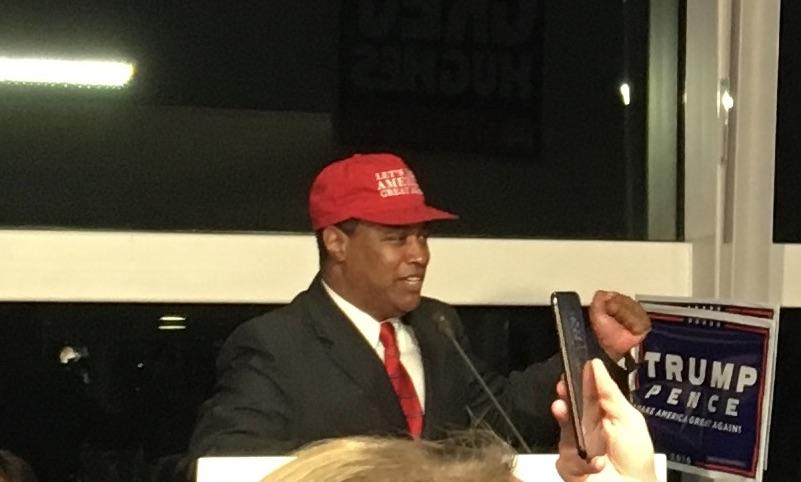 "You have a progressive agenda that has abused hundreds of years of Black history in America by trying to reduce it to a progressive policy that says 'if you don't support this policy, that means that you're racist,'" Evans said. Instead, Evans said he's focused on expanding free market principles to uplift Black Americans and help them achieve the American dream. "I look for ways to promote entrepreneurship and business ownership that's sorely lacking, in particular in the Black community," Evans said. "If you're telling me a larger government will be better, I'm not interested in it because we've tried that and it doesn't work." To bring more Black people over to the GOP, he argued, Republicans need to talk more about racial justice issues. "My appeal is to separate out the political philosophy arguments on how government should be involved in our lives versus how we should treat one another as fellow Americans," he said. "Those are two separate discussions that we have to have." So, why isn't that happening? Kaden Madson, Vice Chair of the Utah Black Republican Assembly, offers this explanation: "A lot of Republicans nationally have gotten to the point where they know that they're not going to get the African American vote," said Kaden Madson, Vice Chair of the Utah Black Republican Assembly. "And they say, 'I'm not going to waste my time trying to get something I'm not going to get.'" The assumption that voting Republican and racial justice don't mix really upsets Madson. "When somebody identifies [with] enough views, which happens to be culturally on the right for me — pro-life, standing up for religious freedom — they're going to get my vote," he said. "Those kind of things are valuable to me. And so, therefore, I'm voting within my own interests because that's what I value." Madson said, while the President has certainly made racially insensitive statements, he still supports him because Trump is the leader of a party that reflects what matters to him. |
| Posted: 30 Jul 2020 01:39 PM PDT  This year won't be the first time Americans have voted amid disruption and crisis. U.S. democracy has functioned through wars and previous public health emergencies, as history shows. In November 1864, the Civil War still raged, with hundreds of thousands dead or wounded. President Abraham Lincoln thought he was likely to lose the election to former general George McClellan, who proposed ending the war with slavery intact. Lincoln was so gloomy about his chances that he wrote a memo to his Cabinet, to be unsealed only after Election Day, that assumed he had lost. (He urged his officials "to save the Union between the election and the inauguration, as [his opponent] will have secured his election on such ground that he can not possibly save it afterwards.") Last-minute military victories, especially the Army's capture of Atlanta, swung support toward Lincoln. Voting was not easy, and circumstances led to innovation. The first widespread use of absentee ballots let Union soldiers vote, providing Lincoln's margin of victory. Two days after his reelection, Lincoln spoke to a crowd serenading him at the White House. There were "emergencies," he noted. "But the election was a necessity," he declared. "We can not have free government without elections; and if the rebellion could force us to forego, or postpone a national election, it might fairly claim to have already conquered and ruined us." That faith in democracy has been evident when Americans have voted during other national emergencies. In 1918, the influenza pandemic that infected more than 1 in 4 Americans intersected with Election Day. A second wave emerged near Boston in September. The campaign was intense: World War I was still underway, some women were voting for the first time and "dry" candidates were making a hard push for prohibition. Local and state authorities sought to maintain the integrity of the election while protecting public safety. Health officials in D.C. decided to reopen churches, schools and theaters shortly before the vote. In San Francisco, health officials mandated in October that people wear face masks while in public or in groups of two or more. All poll workers and voters were required to wear masks on Election Day, prompting the San Francisco Chronicle to call it "the first masked ballot ever known in the history of America." Still "in most places the election was held with relatively few complications," one study later concluded. During World War II, many voters were overseas or away from home. In 1942, with strong support from first lady Eleanor Roosevelt, Congress passed the Soldier Voting Act, allowing service members to vote absentee in federal elections and helping states send them ballots. This bill was delayed by Southern opposition because it did not require soldiers, White or Black, to pay the notorious poll tax. In 1944, Congress amended the Soldier Voting Act well ahead of voting, allowing states to simplify the process. Eventually, this legislation helped at least 2.6 million soldiers cast ballots — enough to make a difference in that year's contentious presidential election. Decades later, fears were rampant about a terrorist attack in 2004, the first presidential election held after 9/11. A terrorist attack in Madrid that spring was seen as an effort to influence Spain's elections. The House of Representatives made clear that U.S. voting would not be delayed. By a vote of 419 to 2, it declared that "the actions of terrorists will never cause the date of any Presidential election to be postponed," and that "no single individual or agency should be given the authority to postpone the date of a Presidential election." Rep. Robert W. Ney (R-Ohio) said, "Elections are postponed in countries that have dictators by one individual. We do not operate that way." Today, Congress can help ensure safe, reliable elections by providing funds to states to support significantly expanded voting by mail, early voting and Election Day polling. Already, Congress allocated $400 million toward elections in the Cares Act, but much more is needed. The House-passed Heroes Act includes ample aid, and it's urgent that the next stimulus include election support. We also have to accept that this year, it is likely to take days, not hours, to tally the results. Trump's call for postponement, like something out of an authoritarian handbook, aims to undermine confidence in election results. Consider what a break that is with presidents past: Lincoln thought he would lose in 1864 yet carried on. Woodrow Wilson and the Democrats knew the 1918 vote could bring a setback, as midterms often do. (Indeed, Republicans won back the Congress.) In the 1940s, the opposition party gained seats in each election. All of those votes were held. Americans understood that regular elections, set by statute and authorized by the Constitution, are at the heart of our democracy. Read more: |
| Japan and beyond: Week in Photos - July 25~31 - Kyodo News Plus Posted: 31 Jul 2020 12:31 AM PDT Here is our selection of news photos taken in Japan and beyond by Kyodo News photographers this week.  Cincinnati Reds rookie Shogo Akiyama (center) and teammates kneel in solidarity with the Black Lives Matter movement ahead of the club's 2020 season opener against the Detroit Tigers on July 24, 2020, in Cincinnati, Ohio. (Kyodo)  People dressed as armored warriors take part in a traditional festival dating back 1,000 years in Soma, Fukushima Prefecture, northeastern Japan, on July 25, 2020. Horse racing, the festival's main event, will not be held this year due to the coronavirus pandemic. (Kyodo)  War veterans arrive in Pyongyang, North Korea, on July 25, 2020, to attend a national conference of war veterans on the occasion of the 67th anniversary of the Korean War armistice. (Kyodo)  People walk in Osaka's Umeda district on July 26, 2020, wearing face masks amid the coronavirus pandemic. The western Japan prefecture reported 141 new coronavirus cases the same day, exceeding the 100 mark for the fifth consecutive day. (Kyodo) 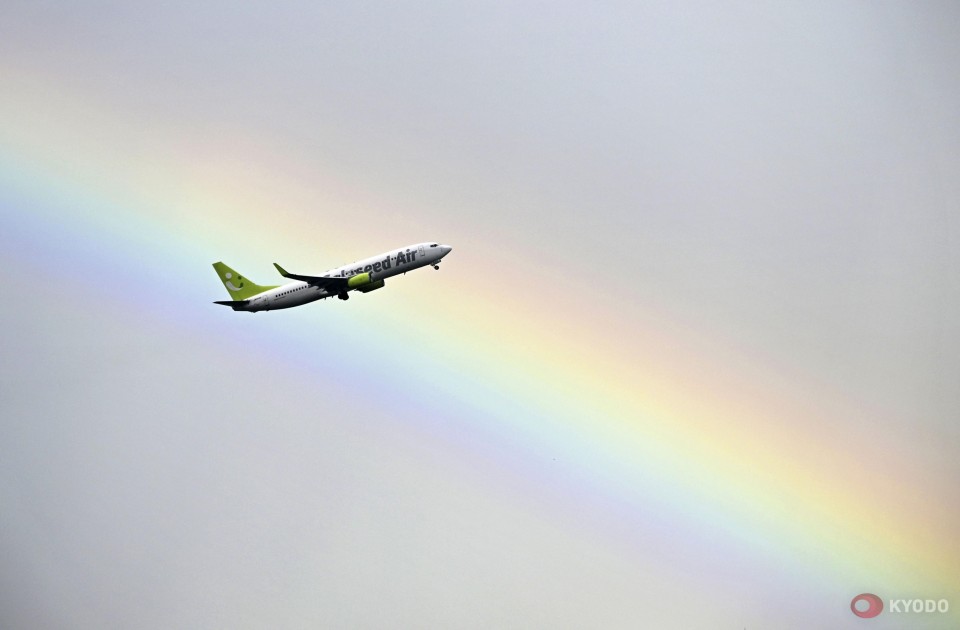 A rainbow is seen over Tokyo's Haneda airport on July 26, 2020. (Kyodo)   Visitors wearing masks enjoy a Milky Way-themed illumination at the main observation deck of Tokyo Tower on July 28, 2020. (Kyodo) 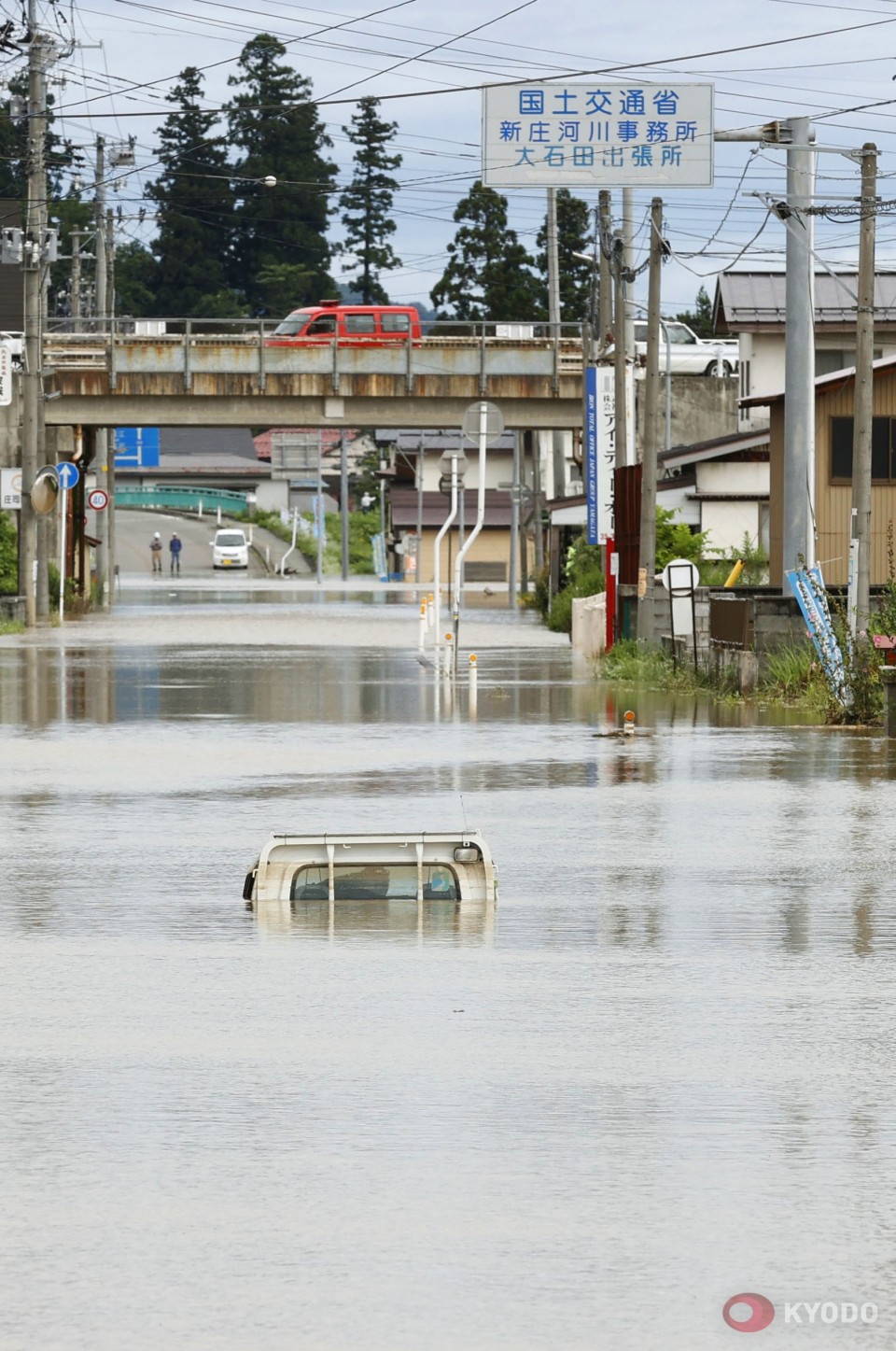  Photo taken on July 29, 2020, shows an interior of the recently renovated Nippon Budokan hall, which was unveiled to the media about one year ahead of the postponed Tokyo Olympics. The indoor arena will be used as the venue of judo and karate during the Tokyo Games in 2021. (Kyodo) 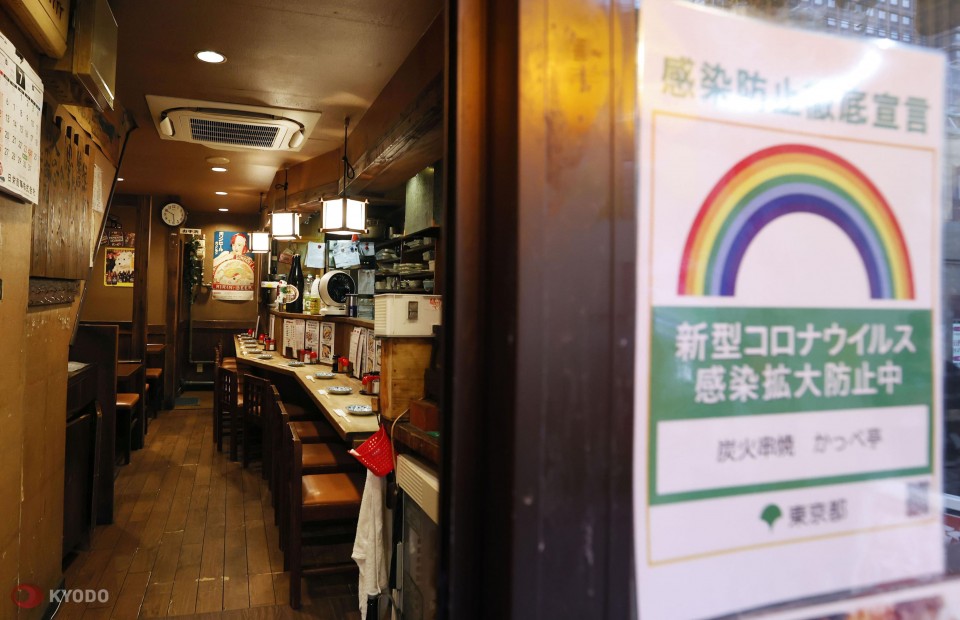 A Tokyo metropolitan government sticker is displayed at the entrace of a Japanese-style bar in Tokyo to certify that adequate anti-coronavirus measures have been taken there. Few people were seen at the bar on July 30, 2020, when Tokyo reported 367 new coronavirus cases, a single-day record at the time. (Kyodo)  The scene of an explosion that left one person dead and 17 others injured in Koriyama in Fukushima Prefecture as seen from a Kyodo News helicopter on July 30, 2020. The explosion occurred at a "shabu shabu"-style hot pot restaurant in an area with homes and restaurants and is believed to have been caused by a gas leak. (Kyodo)  Pickled plums are spread on racks to dry in the sun to make "umeboshi" in Wakayama Prefecture on July 30, 2020. (Kyodo) Copyright © 2020 Kyodo News All rights reserved. Back number: Japan and beyond: Week in Photos - July 18~24 Japan and beyond: Week in Photos - July 11~17 Japan and beyond: Week in Photos - July 4~10 Japan and beyond: Week in Photos - June 27~July 3   |
| You are subscribed to email updates from "black-dating-for-free" - Google News. To stop receiving these emails, you may unsubscribe now. | Email delivery powered by Google |
| Google, 1600 Amphitheatre Parkway, Mountain View, CA 94043, United States | |


Comments
Post a Comment