Facebook Helped The 2016 Trump Campaign Place Political Ads To Suppress The Black Vote - Scoop.co.nz
Facebook Helped The 2016 Trump Campaign Place Political Ads To Suppress The Black Vote - Scoop.co.nz |
- Facebook Helped The 2016 Trump Campaign Place Political Ads To Suppress The Black Vote - Scoop.co.nz
- These Atlanta events have shifted online due to COVID-19 - MDJOnline.com
- Jessica Krug: university cancels classes by white academic who posed as Black - The Guardian
| Facebook Helped The 2016 Trump Campaign Place Political Ads To Suppress The Black Vote - Scoop.co.nz Posted: 28 Sep 2020 08:28 PM PDT  From: Free Press Action New Report Raises Concerns That Facebook And The 2016 Trump Campaign Colluded On Political Ads To Suppress The Black VoteWASHINGTON - On Monday, British outlet Channel 4 News reported that it had gained access to a massive database of voter information that was used by the 2016 Trump Campaign to discourage Black people from going to the polls. According to the report, the campaign had categorized more than 3.5 million Black American voters for "deterrence." They reportedly received Facebook political ads that discouraged them from turning out to vote on Election Day 2016, and indeed Black turnout was the lowest it had been for a general election in 20 years. Facebook actively helped the Trump Campaign place these ads in 2016, but is now refusing to tell Channel 4 News reporters much more, including what ads were used, where they were placed, and how voters of color were targeted. In 2016, Facebook still provided advertisers with tools that allowed them to target audiences by their "religious and ethnic affinities." These tools were known to realtors, for instance, some of whom used the technology to exclude people of color from seeing certain property ads. And while Facebook banned such discriminatory targeting in 2018, it still refuses to reveal whether it helped the Trump campaign target voters by race in 2016, or whether Facebook helped the Trump campaign show Black people ads that discouraged them from voting. Free Press Action Vice President of Cultural Strategy Collette Watson made the following statement: "We now have the receipts on the ways Donald Trump's 2016 campaign used Facebook to target Black voters and suppress their vote. Facebook needs to come clean about the role it played in discouraging Black voters in 2016, and may continue to be playing in 2020.
"The Trump campaign spent tens of millions of dollars on Facebook political ads in the 2016 campaign. Facebook was willing to pocket this money but has chosen not to be transparent about the ads. "As we approach another contentious election it's time for Facebook to make good on its commitment to fight racism and disinformation. It must submit for an independent race-equity audit all 2016, 2018 and 2020 political ads placed by local, state and federal candidates, including their related targeting data." Free Press Action Senior Policy Counsel Gaurav Laroia made the following statement: "These kinds of data abuses imperil democracy and undermine the legitimacy of our elections. As the 2020 election season is underway we must be dead certain that discriminatory targeting and voter disenfranchisement isn't still happening. We must also ensure that Congress pass privacy legislation that prevents anyone that collects, uses and secures our personal information from using it in a discriminatory manner. "These companies have used our data to enable and sometimes even participate in discrimination against people of color, women, members of the LGBTQ community, religious minorities, people with disabilities, immigrants and other marginalized communities. "Free Press Action and the Lawyers' Committee for Civil Rights Under Law have created a legislative draft that calls on Congress to protect civil rights and privacy online. We believe that privacy rights are civil rights. A new bargain must be struck between ordinary people and the powerful companies that act as gatekeepers to participation in 21st-century life. "Congress must pass privacy legislation that ensures that powerful interests like Facebook and its advertisers don't use our data in ways that violate our rights and silence our voices. We must have control over how our personal information is used, and prohibit its use to build systems that oppress, discriminate, disenfranchise and exacerbate segregation. "Freely and fairly participating in our elections is a hard-won and still embattled right. The continued fallout from the 2016 election shows how abusive and exploitative data practices can imperil those rights. Privacy and civil rights go hand in hand. We must protect both." Free Press Action is a nonpartisan organization fighting for people's rights to connect and communicate. Free Press Action does not support or oppose any candidate for public office. |
| These Atlanta events have shifted online due to COVID-19 - MDJOnline.com Posted: 28 Sep 2020 12:05 PM PDT 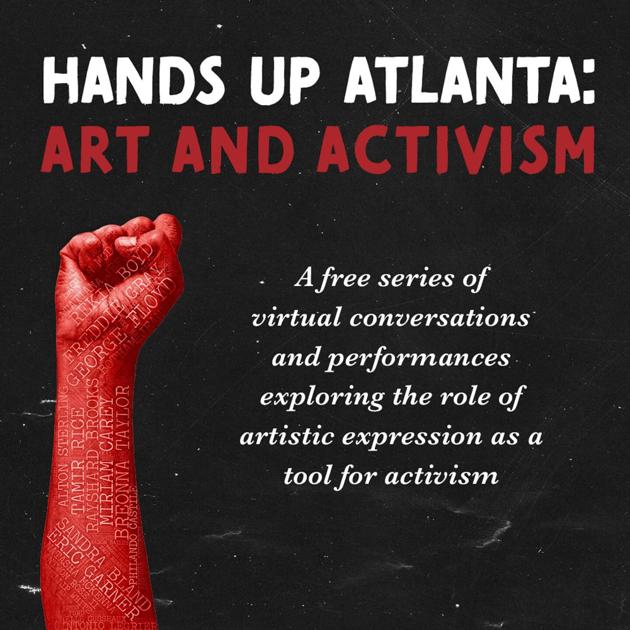 While some local events are being postponed or cancelled due to the COVID-19 outbreak, others are shifting to an online format and/or offering more virtual events to replace the in-person ones that were cancelled or postponed. Here are the latest events making that change: Hands Up AtlantaIn partnership with local artists, activists and community organizations, the Alliance Theatre in Midtown will host Hands Up Atlanta: Art and Activism, a series of conversations exploring the role of artistic expression as an activist tool to ignite dialogue, reflection and civic participation around critical issues affecting Black lives, specifically in Atlanta and the South. Each conversation will cover topics and themes found in the Alliance's upcoming production of "The New Black Fest's Hands Up: Seven Playwrights, Seven Testaments," co-directed by Keith Arthur Bolden and Alexis Woodard. The series will include four Thursday evening events in October and a special family-oriented program Oct. 25. Each Thursday event will feature guest artists and speakers as well as a screening of a film short that has been developed to represent the topic of that evening's discussion. Its schedule is as follows: ♦ Oct. 8 at 7 p.m. – Recasting the Black Image: A conversation about reckoning with the stereotype of the "Black male." This conversation focuses on the distorted portrayal of Black men in mainstream media and society and the ways artist-activists are reshaping this image. ♦ Oct. 15 at 7 p.m. – Black LGBTQ Narratives: This conversation focuses on the intersections of Black, gay and trans identities and the legacy and work of the Black artists within both the Black Lives Matter movement and the LGBTQ rights movement. ♦ Oct. 22 at 7 p.m. – Racial Healing Through Art: This conversation focuses on the impact of racism and the cultural trope of the "strong Black woman" on the lives of Black women. Join artists, healers and mental health professionals for a discussion of artistic pathways that support activist work around women's issues and promote healing from racial trauma. This conversation will be followed by an optional 30-minute expressive arts workshop with Wendy Phillips. ♦ Oct. 25 at 3 p.m. – Hands Up! Engaging Art to Raise Anti-Racist Kids: A family oriented event featuring a reading of the best-selling picture book "Hands Up!," a Q&A with author Breanna J. McDaniel and interactive arts activities to foster conversations about race and allyship for families. ♦ Oct. 29 at 7 p.m. – Standing Up for Racial Justice: The culminating event of the Arts and Activism series featuring Atlanta-based theater arts organizations working on a range of racial justice and equity initiatives. It will be followed by a facilitated allyship discussion focused on navigating racism together. Fintech SouthFintech South, a conference billed as "a global exchange of insights, innovations and trends fueling tomorrow's financial tech industry," will take place virtually this year due to pandemic. The third annual event was originally scheduled for April 20 and 21 at Mercedes-Benz Stadium in downtown Atlanta before being postponed to Oct. 5 through 9 and then shifting online due to the outbreak. More than 2,500 participants are expected for the conference, which will feature over 250 speakers across 60 hours of interactive content. It is being organized by the Technology Association of Georgia. Featured speakers include Marty Flanagan, president and CEO of Invesco; Kabbage founders Rob Frohwein and Kathryn Petralia; Raphael Bostic, president and CEO of the Federal Reserve Bank of Atlanta; Steady founders Michael Loeb and Adam Roseman; Brian Brooks, the acting comptroller of the currency for the U.S. Department of the Treasury; FDIC Chair Jelena McWilliams; Catherine Coley, CEO of Binance.US; Shivani Siroya, founder and CEO of Tala; CFPB Director Kathy Kraninger; author Chris Skinner and many more. To view a complete list of speakers, visit fintechsouth.com/content/speakers. Teen SummitThe Partnership Against Domestic Violence, Georgia's first, largest and most experienced nonprofit working to end domestic violence, recently hosted the first phase of its 11th annual Teen Summit virtually. The two-part series began Sept. 12 and will end with the second part Oct. 10 from 11 a.m. to 2 p.m. The series is free and will feature workshops and teen-led sessions highlighting the importance of bystander intervention when dealing with intimate partner violence. "The PADV staff and teen board have adapted to the challenges of a virtual event and are dedicated to execute an experience that will be as impactful and educational as an in-person event," Jenani Srijeyanthan, the partnership's coordinator of dating violence prevention, said in a news release. "We have an amazing lineup of speakers and workshop leaders who will surely empower us to take action against dating violence." This year's theme, "2020 Vision: See, Believe, Act," will offer parents and teens an improved understanding of the ingredients that make up respectful relationships, as well as how to recognize the warning signs and patterns of dating violence. The Oct. 10 event, titled "Believe and Act," will explore the importance of believing survivors of abuse, including action steps attendees can take to end dating violence in their communities. For more information or to register, visit padv.org/events/teen-dating-violence-summit. |
| Jessica Krug: university cancels classes by white academic who posed as Black - The Guardian Posted: 05 Sep 2020 12:00 AM PDT 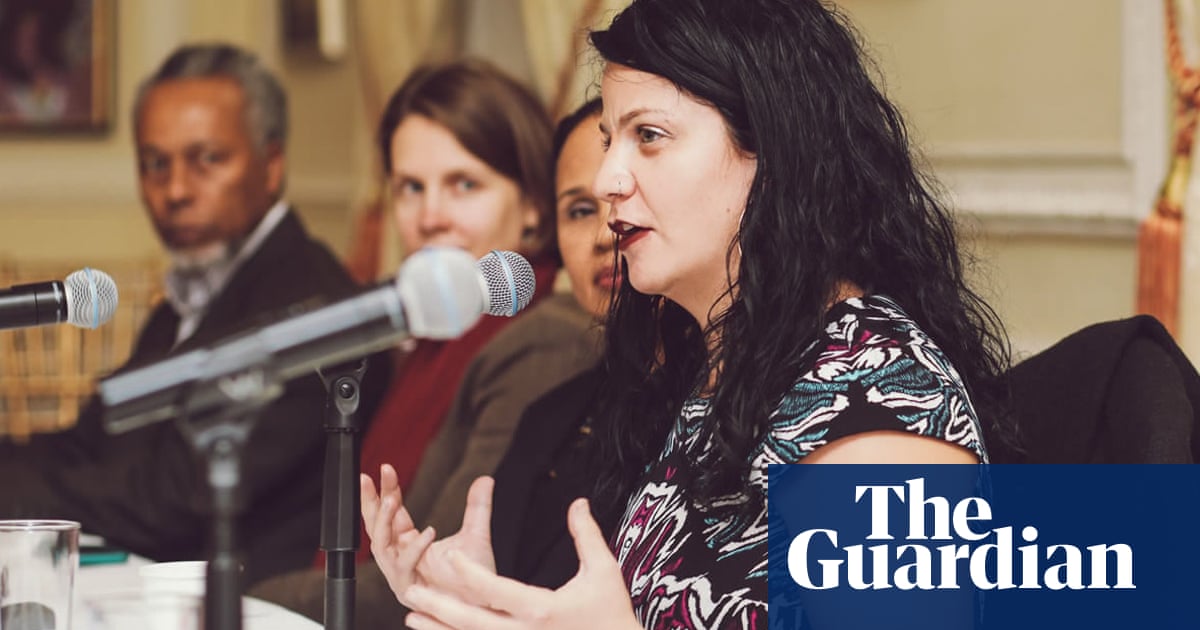 George Washington University has cancelled the classes set to be taught by Jessica Krug, a professor who claimed to be Black when in fact she was a white Jewish woman from suburban Kansas City. In a statement released on Friday night, the University provost, Brian Blake, and dean, Paul Wahlbeck, wrote: "Dr Krug will not be teaching her classes this semester. We are working on developing a number of options for students in those classes, which will be communicated to affected students as soon as possible." Krug triggered headlines around the globe this week after she posted a blog on Medium that claimed she was in fact white despite having lived most of her adult life "under various assumed identities within a Blackness that I had no right to claim: first North African Blackness, then US rooted Blackness, then Caribbean rooted Bronx Blackness". Krug blamed "unaddressed mental health demons" dating back to childhood and said she frequently thought of confessing the deception, "but my cowardice was always more powerful than my ethics". Krug's biography on the GW website lists imperialism and colonialism and African American history among her areas of expertise. Her writings center heavily on issues of African culture and diaspora. The post caused an immediate furor on social media, with Black academics, writers and activists recalling their interactions with Krug. Hari Ziyad, the editor of the online publication RaceBatr, which had published Krug's writings, wrote on Twitter that Krug had confirmed the details of the blogpost to him in a phone call on Thursday morning. He described Krug as "someone I called a friend up until this morning when she gave me a call admitting to everything written here". Ziyad wrote that Krug claimed to be African-Caribbean from the Bronx. He said he had defended Krug in the past against suspicious colleagues. In retrospect, he recalls clues to the deception including her "clearly inexpert salsa dancing" and "awful New York accent". In Krug's book Fugitive Modernities, published before the revelations, she paid tribute to her apparently invented past in the acknowledgment section. She wrote: "My ancestors, unknown, unnamed, who bled life into a future they had no reason to believe could or should exist. My brother, the fastest, the smartest, the most charming of us all. Those whose names I cannot say for their own safety, whether in my barrio, in Angola, or in Brazil." Krug's public persona comes across in a video testimony to a New York city council hearing on gentrification from June. Referring to herself as Jess La Bombalera, Krug refers to "my Black and brown siblings" in the anti-gentrification movement and criticizes "all these white New Yorkers" who "did not yield their time to Black and brown indigenous New Yorkers". In their letter on Friday night, addressed to the "GW Community", Blake and Wahlbeck said: "We want to acknowledge the pain this situation has caused for many in our community and recognize that many students, faculty, staff and alumni are hurting." Beyond the initial Medium post, Krug has not commented publicly on the furore. |
| You are subscribed to email updates from "black-dating-for-free" - Google News. To stop receiving these emails, you may unsubscribe now. | Email delivery powered by Google |
| Google, 1600 Amphitheatre Parkway, Mountain View, CA 94043, United States | |


Comments
Post a Comment