Lithuania's Center-Right Heads Toward An Election Win - Voice of America
Lithuania's Center-Right Heads Toward An Election Win - Voice of America |
- Lithuania's Center-Right Heads Toward An Election Win - Voice of America
- 'Cat People' Movie Facts - Mental Floss
- George Mackie, artist and book designer who had won a DFC as a wartime Stirling bomber pilot – obituary - Telegraph.co.uk
| Lithuania's Center-Right Heads Toward An Election Win - Voice of America Posted: 12 Oct 2020 12:00 AM PDT  VILNIUS, LITHUANIA - Lithuania's opposition conservative Homeland Union party claimed victory Monday in the first round of the country's general election, winning 23 seats in 141-seat parliament as the center-right opposition appears on track to win the vote, defeating the ruling four-party coalition. The Farmers and Greens Union, which forms the backbone of the Baltic nation's current ruling coalition, finished second with 16 seats outright and many fewer candidates making it into the second round of voting being held on Oct. 25. Two liberal parties — the Freedom Party and the Liberal Movement — considered likely allies in a future center-right coalition, claimed a total of 14 seats. The center-left Labour party won 9 seats and the Social Democrats got 8. Six parties will be represented in the Seimas parliament, according to initial results. Three candidates in single-member constituencies claimed victory in the first round of voting including the former finance minister and one of the Homeland Union's leaders, Ingrida Simonyte, a former candidate for president who oversaw drastic austerity cuts during the global financial crisis. She could likely be the country's next prime minister. Under Lithuania's election system, the remaining 68 lawmakers will be elected in a proportional vote on Oct. 25. "We choose the path of consolidation and cooperation, not the one of drawing lines and confrontation," the young leader of conservatives, Gabrielius Landsbergis, said at a press conference Monday. He is the grandson of Lithuanian independence leader Vytautas Landsbergis, who was the Baltic country's first president. Lithuania has kept up strong democratic traditions since regaining independence from the Soviet Union in 1990. It has also played a major role as the protests in neighboring Belarus unfold against that nation's authoritarian leader. The southernmost Baltic country of less than 3 million has seen a recent surge in COVID-19 cases. So far Lithuania has seen 5,500 confirmed coronavirus cases and just above 100 deaths. The center-right coalition government has faced strong criticism over soaring virus-related unemployment. |
| 'Cat People' Movie Facts - Mental Floss Posted: 28 Oct 2020 08:29 AM PDT 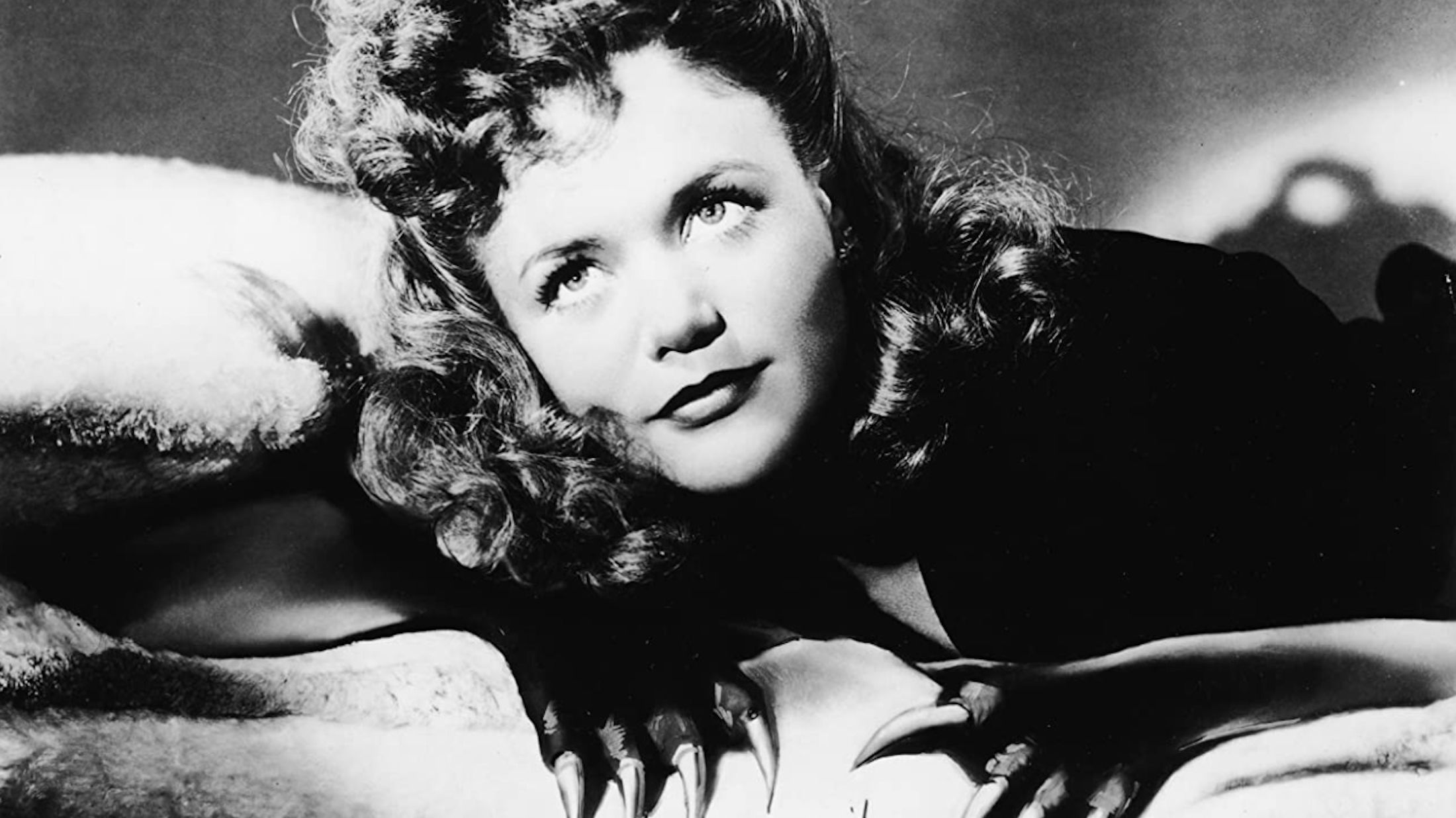 For all its artistic merits, Citizen Kane wasn't a box office success for RKO Pictures. The studio had taken a huge gamble on Orson Welles, a first-time producer and director, by giving him a degree of creative control that a more experienced auteur might've killed for. Unfortunately, from a business standpoint, RKO's gambit failed to pay off, and when Citizen Kane was released in 1941, the daring, innovative movie flopped. The following year, the studio shifted gears to put a greater focus on low-budget horror movies, beginning with Cat People, a suspenseful masterpiece that made millions for the studio and subversively revolutionized the genre. Here are 11 facts about this hair-raising classic. 1. Cat People began as a title without a premise.Thanks to Citizen Kane and other expensive bombs, RKO was teetering on the brink of financial ruin in the early 1940s. To help turn things around, the studio decided to emulate Universal Studios, which had found sustained success with lucrative monster films such as Frankenstein (1931), The Mummy (1932), and their sequels. In 1942, RKO turned to Val Lewton, who had been hired by film producer David O. Selznick as an editorial assistant in 1933, to run the new production unit. At the time, RKO was headed by Charles Koerner, and, according to Cat People screenwriter DeWitt Bodeen, the executive believed "that vampires, were-wolves, and man-made monsters had been over-exploited." On the other hand, Koerner also felt that "nobody has done much with cats." So, he asked Lewton to shoot a movie called Cat People. But while Koerner had supplied the title, the bigwig didn't come up with a premise to go with it. That was Lewton's job. After some thought, Lewton conceived an original story about a cursed woman named Irena who transforms into a murderous panther whenever she feels a twinge of lust. It was a twisted tale that fit the bill perfectly. Bodeen was brought on board to write the final script that he developed alongside Lewton, editor Mark Robson, and the movie's director, Jacques Tourneur. 2. Ironically, Val Lewton was afraid of cats.According to his wife, Ruth Lewton, "Val hated cats! Oh gosh, I remember once, I was in bed and he was writing—he used to like to write late in the night. There was a catfight outside, and the next thing I knew, he was up at the foot of my bed, nervous and frightened. He was very unhappy about cats. I think it stemmed from an old folk tale he remembered in Russia—that cats were peculiar creatures that you couldn't trust." This wasn't her husband's only phobia: He also had some very strong misgivings about being touched and even a simple handshake could make him extremely uncomfortable. Many film historians believe that these twin fears inspired Cat People's plot, at least to a certain extent. 3. Numerous set pieces in Cat People were recycled from other films.Hampered by a shoestring budget of just over $141,000, Lewton made sure to cut corners when he could. The stone wall from Cat People's famous bus scene had previously appeared in 1939's The Hunchback of Notre Dame, and the vast staircase in Irena's home was originally built for 1942's The Magnificent Ambersons, Orson Welles's second movie. And the entire Central Park set was a remnant of a Fred Astaire dance flick. 4. Cat People was one of the first horror movies to use the "jump scare."The bus sequence is easily the most iconic moment in Cat People, and for good reason. The scene finds Alice Moore (Jane Randolph) being pursued down an empty New York street by a jealous Irena Dubrovna Reed (Simone Simon). In the piercing darkness, Alice can't see exactly who or what is following her, but she hears the clicks and clacks of oncoming footsteps. And then the noise stops. Terrified, Alice quickens her pace. Pausing at a light post to gather her senses, she looks back with widened eyes. Suddenly, the silence is broken by the hiss of a city bus that plows into view, scaring the audience half to death. Lewton's subsequent films were loaded with equally jarring false alarms. In his honor, some horror historians have taken to calling this technique the "Lewton bus." Today, it's more commonly known as a "jump scare," of which the stalking scene in Cat People is among the earliest known examples. 5. Cat People director Jacques Tourneur was nearly fired.Although Lewton produced Cat People and it was universally seen as his baby, he didn't direct it. To sit in the director's chair, Lewton recruited his good friend Jacques Tourneur, who had become a legendary figure in the annals of both horror and film noir cinema. However, four days after Cat People started shooting, Tourneur was almost fired when production chief Lew Ostrow watched some raw footage from the movie. Thoroughly unimpressed, he resolved to hire a replacement director. Koerner didn't share these misgivings and overruled Ostrow, thus saving Tourneur's bacon. 6. Several details about Irena's backstory were omitted from Cat People.As film historian Greg Mank notes on the DVD commentary, early drafts of the script called for the womanizing psychologist Dr. Judd (Tom Conway) to learn that Irena's father had died when she was very young and that when her mother passed away, the dying woman transformed into a panther. Furthermore, Lewton and scriptwriter DeWitt Bodeen thought about opening their film in the Balkan village of Irena's birth. During an unrealized prologue scene, a Nazi Panzer division was going to be shown invading her community. At first, the Germans would meet no resistance, but come nightfall, they'd be massacred when the villagers morphed into giant felines. Eventually, Bodeen and Lewton scrapped that idea, opting to set the whole of Cat People in New York City. 7. Elizabeth Russell's only line in Cat People was dubbed over by Simone Simon.For the café wedding reception scene, Tourneur and Lewton wanted to hire an actress with a vaguely feline appearance. This eventually led them to B-movie veteran Elizabeth Russell, who found out about the job opening while she was on a double date. One of the participating men on the date was Peter Viertel, a prominent screenwriter, who told Russell, "You know, I have a friend at RKO who needs a woman for his new movie who looks like a cat. Why don't you go see him?" Needless to say, Russell was taken aback. "You mean you think I look like a cat?" she replied. Regardless, that awkward exchange ended up boosting her career in a big way. Viertel's friend turned out to be Val Lewton himself, who took a liking to Russell and gladly handed her the part. She'd go on to make appearances in many of his other films, including Cat People's 1944 sequel, The Curse of the Cat People. The original movie gives Russell a single line of dialogue. Looking Irena directly in the eye, her mysterious character asks "Moya sestra? Moya sestra?" Translated from Serbian, this means "My sister? My sister?" Yet, the voice that we hear isn't Russell's—Simon was asked to dub the line. 8. That mysterious shadow in Cat People's pool scene was cast by Jacques Tourneur's fist.Alice Moore has a second brush with death when Irena—now in cat form—nearly traps her in a hotel swimming pool. Panic sets in once she notices a shapeless shadow descending the locker room staircase. Tourneur claimed that this was produced by his clenched fist, which he diffused via spotlight. 9. Alan Napier, who played Alfred in the Adam West Batman series, had a minor role in Cat People.Long before he was cast as the Caped Crusader's butler, Napier took on a bit part in Cat People as a good-humored co-worker of both Alice and Oliver (Irena's husband). Napier soon befriended Lewton, and when the producer died young in 1951, Napier gave his eulogy at the funeral. 10. The preview screening of Cat People was preceded by a Disney cartoon.Cat People was the first motion picture that Val Lewton had ever been put in charge of. So just as you'd expect, he was a little nervous at the first public preview screening. Held inside RKO's Hillstreet Theatre in Los Angeles on October 6, 1942, the event started off on the wrong foot. Somebody at the studio had decided to amuse the crowd with a tabby-themed Disney cartoon right before the main feature. Lewton was mortified. "Val's spirits sank lower and lower as the audience began to catcall and make loud mewing sounds," Bodeen later recalled. Things didn't get any better when the words Cat People popped onto the screen. "The picture's title was greeted with whoops of derision and louder meows," said the screenwriter. But the laughter wouldn't last long. According to Bodeen, "when the credits were over and the film began to unreel, the audience quieted and, as the story progressed, reacted as we hoped an audience might. There were gasps and some screaming as the shock sequences grew. The audience accepted and believed our story, and was enchanted." Word of the evocative horror picture spread like wildfire, turning Cat People into a hit. Whereas Citizen Kane had earned a paltry $1.5 million at the box office, Cat People raked in $4 million—enough to make it the highest-grossing RKO film of the year. Few people were more delighted by the movie's success than Lewton's old mentor David O. Selznick, who wrote in a congratulatory letter, "I know no man in recent years who has made so much out of so little as a first picture." 11. Cat People inspired some surprising fan mail.Numerous viewers thought the exchange between Irena and Russell's exotic cat lady was laced with sexual tension. According to Bodeen, "Some audience members read a lesbian meaning into the action. I was aware that could happen with the café scene, and Val got several letters after Cat People was released, praising him for introducing [lesbianism] to films in Hollywood." While Lewton was surprised by this reading of the film, Bodeen privately embraced it: "I rather liked the insinuation and thought it added a neat bit of interpretation to the scene. Irena's fears about destroying a lover if she kissed him could be because she was really a lesbian who loathed being kissed by a man." |
| Posted: 19 Oct 2020 12:00 AM PDT  George Mackie, who has died aged 100, became a celebrated book designer and illustrator after the Second World War, during which he served as a pilot with Bomber Command – an experience which left him with mixed feelings. The middle years of the last century were a golden age in the quality of book production, but all that changed in the late 1960s and 1970s, when letterpress printing all but disappeared and the oil price crisis hit the British paper industry. One university press refused to give way, and maintained the standards that others abandoned. This was the Edinburgh University Press, under the direction, from 1953 to 1987, of Archie Turnbull, together with his "official designer" Mackie, whom he had recruited soon after he left art school, on a freelance basis. Through the 34 years of their creative partnership – supported by excellent local printers, bookbinders and paper-mills – Turnbull and Mackie, working hand-in-glove, continued to design books made using hand-set and machine-composed letterpress type. Together they studied examples of fine printing and book jackets from the past, and applied them to their designs. Mackie would be given a host of ideas, from which a rough design would emerge, to be debated with Turnbull often over several days. In letterpress printing, layouts have to be imagined, sketched and minutely specified before pages can be made – an expensive process rendered practical by the precision of Mackie's layouts. The quality of Edinburgh University Press publications came to be recognised all over the world. It joined the American Association of University Presses in 1967 and featured regularly in its annual Best Books Show. Books designed by Mackie are now collector's items in themselves, one of the most attractive being Sir Alexander Gray's translation of Historical Ballads of Denmark (1958), with illustrations by Mackie and Edward Bawden, a limited edition of 750 copies printed on coloured paper. By the time Turnbull retired and Mackie's connection with the publisher ended in the 1980s, there was a staff of more than a dozen and 459 titles had been published. Mackie achieved the rare distinction of being both a Royal Designer for Industry and a recipient of the DFC. He had joined the RAF aged 19 in July 1940. After training as a pilot, he initially flew Wellington bombers, but in June 1941 he arrived at RAF Wyton, near Huntingdon, to join 15 Squadron, which had recently been re-equipped with the Stirling, the RAF's first four-engine heavy bomber. The seven-man crew included two pilots and Mackie flew his first bombing operations as a second pilot before he was given command of his own crew. Later in 1941, Lady MacRobert, the widow of a Scottish landowner and cattle breeder, made a donation of £25,000 to buy a bomber in memory of her three sons who had all been killed serving in the RAF. When she presented the Stirling – named "MacRobert's Reply" – to 15 Squadron she included a letter in which she wrote: "I know you will always strike hard, sharp and straight to the mark. That is the language the enemy understands. My thoughts and thousands of other mothers are with you." Mackie bombed industrial targets in Germany, and in December 1941 attacked the German capital ships Scharnhorst and Gneisenau in Brest. He also dropped mines in approaches to enemy-held ports and in the Baltic. In the eight months he was at RAF Wyton, 20 Stirlings were lost on operations. In February 1942 Mackie joined a bomber training unit instructing new crews to fly the Stirling, a job some thought was more hazardous than flying on operations. Occasionally, the training units were used to supplement the main bomber squadrons and Mackie flew with a student crew on the first "Thousand Bomber" raid, when the target was Cologne on the night of May 30/31 1942. Two months later, again with a student crew, he took off to bomb Hamburg. Of the eight crews sent on the operation, four were lost. The weather was atrocious and Mackie was forced to fly in cloud for more than five hours with ice building up on the aircraft's rudders, ailerons and elevators. He remembered it as his most frightening experience. In October 1943 Mackie returned to operations to fly the Stirling with 214 Squadron, which soon re-equipped with the American-built B-17 Flying Fortress bomber. A fellow pilot on the squadron, who became a close friend, described Mackie as "a small dark-haired Scot of serious mien and fiery temper". He went on to say: "When I got to know him better, I found a tremendous store of humour and warmth that lay in him below the surface." He also commented that Mackie was recognised as a first-class pilot who "maintained an iron discipline in the air". The squadron's task was to fly radio and radar countermeasure sorties to confuse the enemy's air defence control and reporting system during major bombing raids. By October 1944, Mackie had flown 44 operations against the enemy, and later in the year he was awarded the DFC. Many years after the end of hostilities, Mackie reflected: "I gave the war little thought for many years. With months of service in the frontline, I didn't see a single dead body. Nor was I aware of the enormity of Europe's tragedy. I looked down on the burning cities and saw them, with their defences, only as threats to my own survival." His ambivalence was reflected in a 2012 letter he wrote to the London Review of Books following an article by Jonathan Meades describing the new Bomber Command Memorial in Green Park as "a lump of Croesus bling". "As one who had the audacity to respond in kind to Germany's bombing campaigns," Mackie explained, "I write to applaud Jonathan Meades's demolition of the recently built monument to Bomber Command, which I find trivial and irrelevant. "The long absence after the war of any formal recognition in stone was creating an increasingly powerful silence where all manner of feelings of revulsion or acclaim were felt. No solid memorial could express so clearly today's ambivalence." George Alexander Mackie was born at Cupar in Fife on July 17 1920 to David Mackie and Kathleen, née Grantham. He was educated at Bell Baxter Secondary School and then at the Dundee College of Art. After his active service with 214 Squadron he returned to instructing on the Stirling before joining 46 Squadron in February 1945. He was flying a later version of the aircraft, which had been modified as a transport aircraft, and he flew routes that took him as far afield as south-east Asia. By the end of the war he had completed a total of 2,151.5 hours' flying. He left the RAF as a flight lieutenant in 1946 to resume his art studies at Edinburgh College of Art. While working with Edinburgh University Press, Mackie taught design at Gray's School of Art in Aberdeen, serving as head of department from 1958 to 1980 . As well as his books and design work, he was a proficient painter and was elected to the Royal Scottish Society of Painters in Watercolour. Examples of his works are held in public and private collections. A major retrospective of his book design work was held in 1991 at the National Library of Scotland. He married, in 1952, his fellow artist Barbara Balmer, RSA, who died in 2017. They had two daughters, one of whom died in March this year. George Mackie, born July 17 1920, died October 3 2020 |
| You are subscribed to email updates from "single-baltic-lady" - Google News. To stop receiving these emails, you may unsubscribe now. | Email delivery powered by Google |
| Google, 1600 Amphitheatre Parkway, Mountain View, CA 94043, United States | |


Comments
Post a Comment