Free Online Dating Sites Houston Texas - Beer-lovers shop - The Two River Times
Free Online Dating Sites Houston Texas - Beer-lovers shop - The Two River Times |
- Free Online Dating Sites Houston Texas - Beer-lovers shop - The Two River Times
- Hacker leaks data of 2.28 million dating site users - ZDNet
- The Vaccinated Class - The New York Times
- Biden's free college plan would increase enrollment at public colleges but hurt privates - Inside Higher Ed
- With anniversary of Kobe Bryant’s death approaching, Lakers still wrestle with grief - OCRegister
| Free Online Dating Sites Houston Texas - Beer-lovers shop - The Two River Times Posted: 19 Jan 2021 08:51 AM PST [unable to retrieve full-text content]Free Online Dating Sites Houston Texas - Beer-lovers shop The Two River Times |
| Hacker leaks data of 2.28 million dating site users - ZDNet Posted: 24 Jan 2021 04:54 AM PST  A well-known hacker has leaked this week the details of more than 2.28 million users registered on MeetMindful.com, a dating website founded in 2014, ZDNet has learned this week from a security researcher. The dating site's data has been shared as a free download on a publicly accessible hacking forum known for its trade in hacked databases. The leaked data, a 1.2 GB file, appears to be a dump of the site's users database. The content of this file includes a wealth of information that users provided when they set up profiles on the MeetMindful site and mobile apps. Some of the most sensitive data points included in the file include:
 Messages exchanged by users were not included in the leaked file; however, this does not make the entire incident less sensitive. While not all leaked accounts have full details included, for many MeetMindful users, the provided data can be used to trace their dating profiles back to their real-world identities. When we reached out for comment to MeetMindful on Thursday via Twitter, a MeetMindful spokesperson redirected our request to an email address from where we have not heard back for three days. In the meantime, the forum thread where the MeetMindful data was leaked has been viewed more than 1,500 times and most likely downloaded, in many cases. The data is still available for download on the public file-hosting site where it was initially uploaded. The site's data was released by a threat actor who goes online as ShinyHunters, who earlier this week also leaked the details of millions of users registered on Teespring, a web portal that lets users create and sell custom-printed apparel. A request for comment sent to an email address previously used by ShinyHunters was not answered. The leak of this highly sensitive data represents a looming issue for the site's users and the main reason why MeetMindful needs to notify account holders. Over the past few years, many cybercrime groups have engaged in a practice called sextortion, where they take data leaked from dating sites and contact site users, threatening to expose their dating profiles and history to family or work colleagues unless they're paid a ransom demand. |
| The Vaccinated Class - The New York Times Posted: 23 Jan 2021 02:00 AM PST  The coronavirus vaccine wasn't supposed to be a golden ticket. A tiered and efficient rollout was meant to inoculate frontline workers and the most vulnerable before the rest of society. But scattershot and delayed distribution of the still-limited supply now threatens to create a new temporary social class — one that includes not just people who are at higher risk for infection or severe illness and death, but also grocery store customers in Washington; Indonesian influencers; elementary schoolteachers; American celebrities; New York Post reporters and others who, because of their work or because of luck, have been able to get immunized quickly. Tests of the vaccines show they're incredibly effective. But people can still get the coronavirus while in the process of getting inoculated, and could possibly still spread the virus, especially if they come in close contact with others or stop wearing masks. As a result, as people clamor to get in line for what represents the only real safety from a disease that has killed millions, plenty of individuals who have been vaccinated will wait patiently until they are told it's safe to gather. But others will feel emboldened to begin to congregate with their vaccinated peers. Some of them will be among the most privileged people in the world. Knightsbridge Circle, a luxury travel service in London that charges 25,000 pounds a year for membership, made waves earlier this month when its founder, Stuart McNeill, told The Telegraph that the club would fly members who were 65 or older to the United Arab Emirates to receive privately obtained vaccines. (In Britain, the vaccination is only available through the National Health Service.) Since going public with the offer, the club, which arranges luxury experiences and accommodations for its members, has received more than 2,000 applications for membership and thousands of phone calls, emails and social media requests, according to Mr. McNeill. He also wrote, in response to emailed questions, that his organization has been approached by "several private jet companies" looking to team with the club to transport the vaccinated. On Friday, his organization announced that it would begin selling vaccines to people who were not previously members of the club for the price of 10,000 pounds per person, as long as individuals are 65 or older — or can prove that they have underlying health conditions. (Knightsbridge Circle will "ask for proof of this when booking," a spokeswoman wrote in an email.) The vaccines will come as part of a three-week "membership package." But that package will not include anything beyond the vaccine and transport to and from the airport and vaccination sites. Interested parties will have to book airfare and three weeks worth of accommodations themselves. For Mr. McNeill's clients, the real fun will come once the inoculations are done. Some of those who expect to be vaccinated in the U.A.E. have been looking to schedule specialized excursions after they are inoculated, he said, adding: "Desert safari seems to be the most popular." (Members who travel to the U.A.E. will stay in the country for the required time before a second dose.) Mr. McNeill also said that, given the uncertainty around staples of the spring calendar this year — the Royal Ascot, Monaco Grand Prix and Wimbledon — he expects his vaccinated clients to "head to the Mediterranean" earlier than usual. (Top destinations for the company's clients, he said, included St.-Tropez, Mykonos, Ibiza and Bodrum.) A leisure class of the newly vaccinated will mean that hotels, catering services and other businesses will be scrambling to employ bartenders, servers and other staff who are also vaccinated, the better to ensure the safety of all. A vaccination will begin to represent not only safety from the virus but also, for some, a leg up in the job market. "Just like business partners require background checks for all of our professionals today, a lot of people are going to start wanting to say, 'Hey, send vaccinated professionals as well,'" said Jamie Baxter, the chief executive of Qwick, an Arizona-based web platform that connects service workers with employers. He said that Qwick had already started thinking about how to verify which workers on its platform had been vaccinated. 'Haves and Have-Nots'Over 40 million doses of the vaccine have been administered worldwide, mostly to health care workers, first responders and older individuals, many of whom live in nursing homes. The vaccinated class is and will remain a relatively small portion of the population during the first half of 2021. Covid-19 Vaccines ›Answers to Your Vaccine QuestionsWhile the exact order of vaccine recipients may vary by state, most will likely put medical workers and residents of long-term care facilities first. If you want to understand how this decision is getting made, this article will help. Life will return to normal only when society as a whole gains enough protection against the coronavirus. Once countries authorize a vaccine, they'll only be able to vaccinate a few percent of their citizens at most in the first couple months. The unvaccinated majority will still remain vulnerable to getting infected. A growing number of coronavirus vaccines are showing robust protection against becoming sick. But it's also possible for people to spread the virus without even knowing they're infected because they experience only mild symptoms or none at all. Scientists don't yet know if the vaccines also block the transmission of the coronavirus. So for the time being, even vaccinated people will need to wear masks, avoid indoor crowds, and so on. Once enough people get vaccinated, it will become very difficult for the coronavirus to find vulnerable people to infect. Depending on how quickly we as a society achieve that goal, life might start approaching something like normal by the fall 2021. Yes, but not forever. The two vaccines that will potentially get authorized this month clearly protect people from getting sick with Covid-19. But the clinical trials that delivered these results were not designed to determine whether vaccinated people could still spread the coronavirus without developing symptoms. That remains a possibility. We know that people who are naturally infected by the coronavirus can spread it while they're not experiencing any cough or other symptoms. Researchers will be intensely studying this question as the vaccines roll out. In the meantime, even vaccinated people will need to think of themselves as possible spreaders. The Pfizer and BioNTech vaccine is delivered as a shot in the arm, like other typical vaccines. The injection won't be any different from ones you've gotten before. Tens of thousands of people have already received the vaccines, and none of them have reported any serious health problems. But some of them have felt short-lived discomfort, including aches and flu-like symptoms that typically last a day. It's possible that people may need to plan to take a day off work or school after the second shot. While these experiences aren't pleasant, they are a good sign: they are the result of your own immune system encountering the vaccine and mounting a potent response that will provide long-lasting immunity. No. The vaccines from Moderna and Pfizer use a genetic molecule to prime the immune system. That molecule, known as mRNA, is eventually destroyed by the body. The mRNA is packaged in an oily bubble that can fuse to a cell, allowing the molecule to slip in. The cell uses the mRNA to make proteins from the coronavirus, which can stimulate the immune system. At any moment, each of our cells may contain hundreds of thousands of mRNA molecules, which they produce in order to make proteins of their own. Once those proteins are made, our cells then shred the mRNA with special enzymes. The mRNA molecules our cells make can only survive a matter of minutes. The mRNA in vaccines is engineered to withstand the cell's enzymes a bit longer, so that the cells can make extra virus proteins and prompt a stronger immune response. But the mRNA can only last for a few days at most before they are destroyed. That makes it difficult for economists and businesses to anticipate when people will begin to gather in substantial numbers (in places where they haven't been doing so already) and what the economic impact of such activity might be. "As people are excited to become vaccinated against SARS-CoV-2, they may be overestimating what that protection means," said Jennifer Reich, a professor at the University of Colorado-Denver who specializes in health policy. "It's important that they calibrate their expectations and understand that their behavior after immunization still has to be focused on protecting people around them." But some private event spaces are gearing up for boom times in the spring and summer all the same. Peerspace, a commercial space rental platform (think Airbnb for events and parties) said it is already seeing bookings for its 20,000 locations around the United States, starting in late May. (Jerry Nickelsburg, the director of the U.C.L.A. Anderson Forecast, which issues economic predictions at the opening of each year, said it is "a regulatory question, how soon will those kinds of larger event spaces become available.") Eric Shoup, the company's chief executive, said he was interested to see whether cities and states would make special allowances for those who had been inoculated, especially once a significant portion of the population was vaccinated. "There are going to be the haves and have-nots, if you will," he said. Matt Bendett, Peerspace's head of operations and strategy, wondered whether one's vaccination status would be available to share through an app like Apple Wallet. (According to Bloomberg, interest in such applications — essentially, passports that would show proof of immunization — has surged.) "If that's something that becomes accepted and is not considered a privacy violation of some sort, or we start to see governments kind of changing their tune on how people can use that as verification, I certainly think that's something we could look at how we would leverage," he said. Doctors who have been on the terrible front line of the crisis have, through the fact of their exposure, had a preview of the social world that some who are vaccinated could return to fairly soon. Dr. Alex Tran is an emergency medicine resident physician at Mount Sinai and Elmhurst Hospitals in New York City, where he has worked throughout the pandemic. As of this month, he is fully vaccinated. Given that he and his peers developed antibodies when they were exposed to the virus at the beginning of the crisis, he said, they had not been particularly worried about hanging out with one another. With the vaccine, though, he plans to travel across the country to California to see his parents for the first time in a year. "What I'm waiting for is actually that C.D.C. card that they're giving out being accepted as a method of entry, whether that be for flights or for restaurants, like indoor dining or whatever it may be," he said, referring to the verification card that those who are vaccinated receive. "I could see a situation where a club makes it their official policy that you need to show your vaccine card," Dr. Tran added. "But I think that's just going to open the way up to forged vaccine cards. There's going to be another market there." Already, health care workers are finding that vaccination comes with some small perks. On Friday, the N.F.L. announced that a significant percentage of the crowd at Super Bowl LV in Tampa would be vaccinated health care workers, who will receive free tickets. (How large venues will determine who has been vaccinated is still a contentious subject.) Dr. Tran also expects vaccination status to become a draw on dating apps. He mentioned that a vaccinated friend updated his dating profile on one of the apps to say "Dating me is like dating a golden retriever … who's been vaccinated," and that it had already attracted a good amount of attention. The 'Hottest Thing' in DatingDating app companies confirmed that vaccination has become a hot topic on their platforms. On Tinder, vaccine mentions in user bios rose 258 percent between September and December. "Those who have gotten the vaccine are using their status as a way to spark conversation with potential matches about their experience," Dana Balch, a Tinder spokeswoman, wrote in an email. On OkCupid, those who indicate that they have already received the vaccine are being liked at double the rate of users who say that they are not interested in getting the vaccine, according to a spokesman for the app, Michael Kaye. "Basically, getting the vaccine is the hottest thing you could be doing on a dating app right now," Mr. Kaye said, adding, "What a world we're living in. …" And social media communities for the newly vaccinated (and those interested in being newly vaccinated) have quickly been established. One subreddit, r/Covid19VaccineRats, was created last month by Jamal Fares, a humanitarian aid worker in Beirut, where the vaccination has not yet begun. Mr. Fares said he started the group to combat rumors and misinformation about the vaccine. Over time, he expected it to become a social hub where people might read tales from and about the happily inoculated. "They will start going out, they will start socially interacting, and I presume they'll start sharing those experiences with others," he said of the subreddit's vaccinated members. Dr. Reich, the sociologist at the University of Colorado-Denver, said that she was concerned that government officials would enable irresponsible activity by the newly vaccinated. She urged even those who had been vaccinated to restrain themselves until the protection granted by immunization was better understood — or that protection was more widespread — in order to stave off worst case scenarios. "People are going to feel betrayed if they learn later that they thought they were protected," she said. "And they killed their grandparents." |
| Posted: 25 Jan 2021 12:07 AM PST 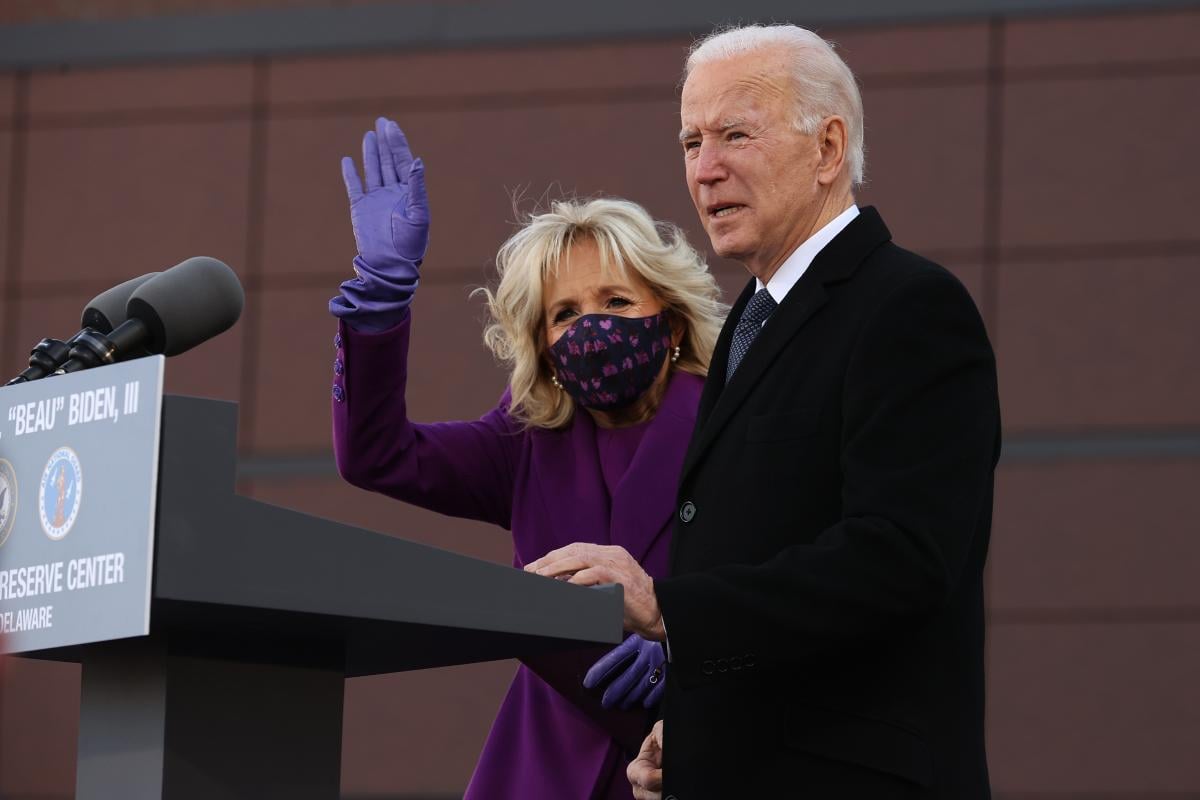 Wells College sits on a picturesque tree-filled campus on the shores of New York's Cayuga Lake, with brick buildings dating back to its founding in 1868, a year when a different president, Andrew Johnson, was impeached. It has a modest $24 million endowment and enrolls a little more than 400 full-time students. It's quite different from the image of blue-blooded and cash-rich institutions like Harvard University, with $42 billion in endowments and 36,000 students. Its margins are so slim, in fact, that last May, when Wells faced the prospect of the pandemic closing its campus in the fall, the college's president, Jonathan Gibralter, wrote that closure could push Wells over the edge. "Wells simply will not receive enough revenue to continue operations," he wrote in a letter. As it turned out, the college was able to hold in-person classes in the fall, and donations have put it on more stable footing, Gibralter said last week. But a new threat is on the horizon, menacing private colleges and universities, particularly smaller ones without much wiggle room that are already facing a decline in the number of traditional college-aged students in the coming years. In the White House now is a president who is promising to make college -- or at least public ones as well as those predominantly serving students of color -- free. Removing the barrier of tuition could be transformative. Studies estimate millions more will be able to get a higher education at public and minority-serving institutions. But it would also mean private colleges and universities, which would still be charging thousands a year in tuition, would find themselves competing for students, who could go elsewhere and not have to pay tuition. Private colleges and universities could see their enrollment decrease by 7 to 14 percent over the next decade if President Biden's plan is adopted, a study by Georgetown University's Center on Education and the Workforce predicted in October. To be sure, presidents of private institutions like Gibralter, Daemen College's Gary A. Olson and Pomona College's G. Gabrielle Starr said in interviews their own colleges would survive. Enough students will want what they offer, smaller class sizes or, in the case of private faith-based colleges, a religious community, to pay for it. "If public higher education were to be tuition-free, we'd weather the storm by offering an educational product in a way that public universities do not provide," Gibralter said. "I really think private liberal arts colleges offer a unique, special kind of education." But there will be many that could fail, said Barbara Mistick, president of the National Association of Independent Colleges and Universities. "And that would threaten a wonderful system of higher education in the country that is top in the world because of its great diversity," she said. "There are going to be unintended consequences," Mistick said. Many communities that rely on their local colleges will suffer, she said, comparing the impact of college closures to the decimation of Main Streets in small towns with the proliferation of big box stores. "Look at what the malling of American did to wonderful small towns," she said. But to Morley Winograd, president of the Campaign for Free College, it might be the price of achieving a greater good. His group on Tuesday released a study it commissioned, estimating that enrollment at four-year, nonprofit private colleges and universities will decline by 12 percent, or 270,000 students, in the first several years after the adoption of Biden's free college. But on the other hand, Winograd, a senior fellow at the University of Southern California's Annenberg School's Center on Communication Leadership and Policy and former senior policy adviser to Vice President Al Gore, said enrollment at public community colleges would rise by 1.23 million, or 18 percent, and at four-year public colleges and universities by an estimated one million, or 17.7 percent. All told, 1.96 million more people would have the opportunity to go to college, a gain of 13.4 percent. Similarly, the Georgetown study predicted that enrollment at public institutions would increase by 6 to 14 percent over the next decade. Even with the loss of students at private colleges and universities, college enrollment over all would increase by 4 to 8 percent, it found. And the additional taxes paid by people earning higher salaries because they have a college degree would pay for what it estimated to be the $683 billion cost of the program over a decade. Elite private colleges and universities would still attract students willing to pay for "reputational value," said Anthony Carnevale, director of the Georgetown center. Others will face conflicting demographic changes. The number of households with two incomes is expected to increase, increasing the pool of families that could afford tuition, he said. But the number of traditional college-aged people is projected to decline. Biden's transition team has been discussing if there is a way to incorporate private colleges into a free college plan, Carnevale said. Under the free college plan Biden laid out in the campaign, the federal government would send to the states two-thirds of the cost of making public colleges, as well as historically Black colleges and universities and other minority-serving institutions, tuition-free, though it would not include the cost of room and board. The states would chip in the remaining third of the cost. One idea that's been discussed, Carnevale said, is to allow those dollars to go to private institutions as well to lower their tuition by the amount public colleges and universities had charged. In return, the private institutions would have to agree to enroll certain a percentage of students, perhaps 15 or 20 percent, who are eligible for Pell Grants. The administration could offer an additional incentive to take on more of the lower-income students by lowering or waiving the federal tax on endowments, he said. A spokesman for the Biden transition, though, did not return press inquiries. Whether Biden will be able to get a free college plan through Congress, even with the slim majority held by Democrats in the House and Senate, is hardly certain. Senate rules would require the support of 10 Republicans to bring any measure up for a vote. Republican lawmakers, and potentially some Democrats, are skeptical of the price tag. Former education secretary Betsy DeVos also reflected the view of some conservative education experts that creating a system relying on government funding will eventually lead to an underfunding of higher education and the rationing of how many students would be able to take a course or pursue a field of study. Should free college pass, however, it would come on the heels of experiments by some states to eliminate tuition for more students at public colleges and universities. However, they do not give a clear picture on the impact on private colleges and universities. Most notably, New York State created the Excelsior program, which has provided tens of thousands of scholarships for state students whose families make less than $125,000 to cover tuition at State University of New York or City University of New York institutions. Presidents of private universities like Gibralter and Daemen's Olson, and Kimberley Wiedefeld, vice president for enrollment management at Roberts Wesleyan College, said their enrollment dropped in the first two years of New York's program. But Gibralter said enrollment would have rebounded if not for the pandemic. Olson and Wiedefeld, though, said enrollment has recovered. Roberts Wesleyan, a Christian college, emphasized the religious community it provides, and also guaranteed prospective students they'd get the support needed to earn their bachelor's degree in four years. The college noted that would save students $46,355 in lost income and $82,074 in lost retirement savings over taking five years to graduate. But also, Olson said, the Excelsior program hasn't yet made public college tuition-free for all the state's students, because of a lack of funding and restrictions that have scared away some students from taking its scholarships, including having to stay in the state for four years after graduation. The 25,000 scholarships provided in 2018 make up only 4 percent of the state's undergraduates. Private universities could have felt a bigger impact if more of the state's undergraduates received free tuition at public universities. "It might have been a serious problem. If it wasn't so restrictive, it might have been a disaster," Olson said. Another notable program is the free community college program Tennessee created. However, the impact on private universities has been blunted by the fact that private universities are eligible to receive money to make tuition free for students pursuing two-year associate degrees at the institutions, said Claude Pressnell, president of the Tennessee Independent Colleges and Universities Association. One benefit is that students getting two-year degrees at private universities also offering four-year degrees graduated at higher rates than at other community colleges. In interviews, the presidents of private universities argued there would be a loss should they enrollment decline or if some institutions close. Starr, of Pomona College, for instance, said the support and tutoring Pomona offers has meant little difference in the graduation rates of students regardless of race. They also argue there is a better way -- to increase the size of Pell Grants enough to cover tuition, but to allow students to use it wherever they want, regardless of whether they are public or private. "It sets up an unnecessary competition between the private-sector colleges and the public sector," Olson said. Instead, the presidents and Mistick said a better course would be to increase the maximum amount of Pell Grants so that students could use them to cover or reduce tuition at whatever institution they want to attend, public or private. Mistick noted that a change in the Pell Grant application process as part of the budget Congress approved in December is expected to increase the number of students eligible to receive the maximum amount by 1.7 million a year. Students will still be able to qualify for the maximum if their families are determined to not be able to contribute anything to the cost of attending college under a complex formula. But those who do not qualify that way will now be eligible for the maximum if their families' adjusted gross income is less than 175 percent of the federal poverty level, or, for single parents, 225 percent of the poverty level. Still, Winograd said there's a trade-off in what private colleges want. Helping only those eligible for Pell Grants would leave out middle-class students and decrease the impact increasing the number of college graduates would have on the economy. |
| With anniversary of Kobe Bryant’s death approaching, Lakers still wrestle with grief - OCRegister Posted: 24 Jan 2021 02:45 PM PST  Even a year later, it's something the Lakers find themselves reeling from. As LeBron James put it, "I try not to put myself back in that head space, because it's just too dark." But the one-year-mark of Kobe Bryant's death is unavoidable, especially as the Lakers retrace their steps. The team was flying home from Philadelphia a year ago when they were startled awake by the terrible news of the helicopter crash that killed Bryant, his daughter Gianna, and seven other people. On Tuesday, the anniversary of the crash, they'll be flying to Philadelphia for the first time since that day — which also happens to be the hometown of one of the franchise's brightest stars. That quirk of the schedule has only added to the emotions bubbling up from the Lakers who were close to Bryant. Anthony Davis said it's sometimes difficult to acknowledge that it happened at all. "It saddens our hearts to actually come to the realization that he's gone," he said. "I know I still have trouble with it. You still just can't believe it, especially when you're really close to him. And I think that just playing back everything on that day, and then you fast forward to a year later to where we're going back to Philly on almost the same exact day." For the Lakers organization, the anniversary will pass quietly — a moment of somber reflection rather than a public outpouring of lingering grief. On her Instagram, Vanessa Bryant has made public pleas that media coverage of her husband and daughter — as well as the other victims of the crash — remain focused on their lives. But Bryant's memory has been threaded in many parts of the last year: The team still has broken huddles shouting "MAMBA" on the count of three. Some of the team's biggest wins in the postseason came while donning Bryant's Black Mamba-inspired uniforms. The championship rings have Mamba-themed backdrops and detailing, and have both of Bryant's jersey numbers, 8 and 24, set in black. The 17th championship in franchise history doesn't erase the enormity of his loss, Davis acknowledged, but he thought it gave some healing. "That entire year, it was heavy hearts about the tragedy," he said. "When you win, it kind of just brings, you know, a little bit of joy back to the city. Doing it for Kobe, for the organization, for the city. And it kind of made it all why we were playing — the bubble and everything we went through that year — it made it worth it." Marching through that grief, however, has often felt grim. The Lakers went through a slew of tributes for Bryant during the regular season prior to the hiatus, and between the All-Star Weekend focused on Bryant and the Staples Center Celebration of Life for him and Gianna, the stream of events were emotionally taxing. James still keeps Bryant literally close at hand: On his left middle finger, he still wears a sleeve with Bryant's No. 24 on it. But even dating back to that first week, when James told the team privately he was ready to shoulder the pressure of the rest of the season, that role has carried a significant weight — he's just felt it was necessary. " As the leader of the ballclub it was my job and my responsibility to take it all on and represent our team with the most strength that I could (muster) at that point and time," he said. "For the purple and gold, for Laker Nation, it was my job to take that, take that responsibility and I wanted to let everyone know inside this organization that I was OK with doing that." For many of the returning members of the team, talking about Bryant's passing is still difficult. Marc Gasol, who was not on the team last season but still knew him well through his brother Pau, said he preferred to keep most of his thoughts private: "I'm not comfortable talking about it. I'm sorry. Still to this day, I have never really talked about it and I'm sorry that I cannot give you any thoughts or stuff on it." What might have changed the most is their understanding of the scale: Davis said he didn't know during Bryant's life how influential he was even outside the world of sport. "When people pass, people usually come up with all these things about how great he was and he inspired me and such and such, but I think that he really inspired so many people and that's why so many people feel the pain that the basketball community felt last year," he said. "And they're still feeling it." And the Lakers are, too. |
| You are subscribed to email updates from "black-dating-for-free" - Google News. To stop receiving these emails, you may unsubscribe now. | Email delivery powered by Google |
| Google, 1600 Amphitheatre Parkway, Mountain View, CA 94043, United States | |


Comments
Post a Comment